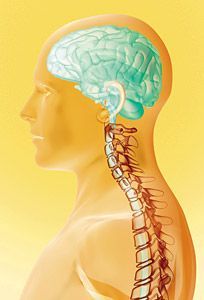
The scope of chiropractic is as broad as the scope of influence of the nervous system. Although many chiropractors tend to focus on disorders associated with the physical body, particularly musculoskeletal pain syndromes, abnormal nervous system function may also affect emotional and psychological health. Research is providing chiropractors with information about how the stress response is mediated by the autonomic nervous system1 and how afferent input from the spine affects brain function.2-3
Rome published a two-part series reviewing neurovertebral influence on visceral and autonomic function.4-5 This is the most comprehensive review I have seen on the topic, featuring more than 1,100 references. Rome notes: "Attempts have been made to classify conditions addressed by spinal manipulation into Type M (musculoskeletal) and Type O (organic). However, it seems that this is the only area in the health sciences where such a classification has been suggested. If categorization is necessary at all, then virtually all conditions should be basically 'Type N' (neurological) as nominated by Leach, as essentially all conditions would have a neurological element ... the weakness of a Type M/Type O classification renders it superfluous, if not meaningless. A 'Type N' designation would highlight the importance of total body considerations in such an extensive and integrated model of health care, as well as the encompassing influence and the integrative action of the nervous system."
Among Rome's conclusions: "It is the emphasis on a localized ANS connection with the spine which would differentiate the chiropractic health care profession from others in the manipulative and manual therapies field. It must be appreciated that this association implies more than a musculoskeletal connection, and thereby may have the potential to influence neurophysiology and consequently homeostasis, which could contribute to overall patient well-being."5
There is a small, but growing body of evidence concerning the relationship of the spine, vertebral subluxation, chiropractic care, and psychological and emotional health. The following sampling is not a comprehensive review; it is merely to whet your appetite on the subject. A systematic review examined psychological outcomes in randomized controlled trials of spinal manipulation. The study concluded: "There was some evidence that spinal manipulation improved psychological outcomes compared with verbal interventions ... The clinical implications are that physical treatments, such as spinal manipulation have psychological benefits."6
Genthner, et al.,7 reported on a series of 15 patients with a history of depression. The Beck Depression Inventory II was used to measure the baseline level of depression and any post-care changes following orthospinology care. A paired t-test demonstrated significant improvement in depression test scores.
Other articles addressing mental health issues and chiropractic care have been published, ranging from single case reports to randomized clinical trials. Favorable responses were reported in persons with conditions including addiction,8 depression,9 ADHD,10 autism,11 dyslexia and learning disabilities.12 Additionally, published papers report changes in general health measures in chiropractic patients using the RAND-36 and Global Well Being Scale (GWBS),13 changes in domains of health-related quality of life among public safety personnel undergoing chiropractic care,14 and chiropractic care for patients with cancer-related traumatic stress symptoms.15
More than 38 years ago, my first chiropractor explained that everything we experience is processed through our nervous system. When our perception of the world is distorted by nerve interference, it compromises our ability to respond appropriately. He noted that in addition to damaging our physical health, it could result in impaired psychological and emotional function as well. Finally, he opined that when this happened to a significant number of people in a society, a sick society would result.
The distinction between Type O (organic) and Type M (musculoskeletal) disorders is illusory. Chiropractic care is concerned with the totality of the human experience. By analyzing and correcting vertebral subluxations, a patient is placed on a more optimum physiological path. This brings the individual closer to the definition of health promulgated by the World Health Organization: "Health is a state of complete physical, mental and social well-being and not merely the absence of disease or infirmity."16
Williams NH, Hendry M, Lewis R, et al. Psychological response in spinal manipulation (PRISM): a systematic review or psychological outcomes in randomized controlled trials. Complementary Therapies in Medicine, 2007;15:271-283.
Genthner GC, Friedman HL, Studley CF. Improvement in depression following reduction of upper cervical vertebral subluxation using orthospinology technique." Journal of Vertebral Subluxation Research, Nov. 7, 2005.
McAllister W, Boone WR. Changes in physical state and self-perceptions in domains of health related quality of life among public safety personnel undergoing chiropractic care. Journal of Vertebral Subluxation Research, Aug. 6, 2007.
While cervical disc pathology can unquestionably produce radiculopathy, many patients presenting with arm pain, paresthesia or perceived weakness do not exhibit the clinical behavior of true nerve-root compromise. In these cases, failure to differentiate the primary pain generator may lead to unnecessary spinal injections, nerve ablation procedures or surgical consultation despite limited likelihood of benefit.
The New Jersey Board of Chiropractic Examiners has made a precedential decision, concurring with the Association of New Jersey Chiropractors' (ANJC) position paper on chiropractic X-ray guidelines. In plain terms, the board ruled, consistent with the ANJC position, that insurance companies cannot use medical X-ray rules or recommendations, like those written by the American College of Radiology (ACR), to decide whether a chiropractor's X-ray was necessary.
For decades, chiropractors have been told the answer to more professional referrals is simple: educate medical doctors about chiropractic. There is some truth in that advice; but it is also incomplete. The modern challenge is not simply getting another healthcare professional to know that chiropractors exist. It is becoming the kind of clinician (and building the kind of professional relationship) that makes collaboration easy and sustainable.