It was a curious moment in chiropractic history, not unlike the "phony war" that preceded the European conflagration then getting underway, as though the storm of intra-professional politics had taken a few seconds to catch its breath before the "winds" picked up again. The 10-year-old National Chiropractic Association (NCA), successor to the old American and Universal chiropractic societies (Keating & Rehm, 1993), had been gathering strength, resources and confidence in its determination to lead the profession to a greater level of legitimacy and prosperity. "Sound Professional Advancement" was the motto that editor Loran M. Rogers,DC. offered in every issue of the National Chiropractic Journal.
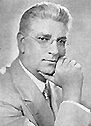
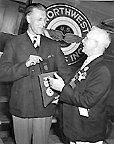
Figure 1: Dr. John Nugent, from the cover of the National Chiropratic Journal, November 1941
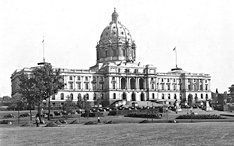
Figure 2: "Minnesota State Capitol building in St. Paul," 1940
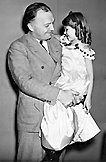
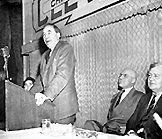
Figure 3:National Chiropractic Journal 1940 (Oct); 9(10): cover. Photo depicts Harold Stassen, Governor of Minnesota, 1940
A Committee on Educational Standards, comprised of leaders from the NCA and the Council of State Chiropractic Examining Boards (COSCEB; renamed FCLB circa 1968), had taken the first, fumbling steps in accrediting chiropractic schools (Crider, 1936). John J. Nugent, D.C., former president of COSCEB, Gordon Goodfellow, D.C., N.D. of the NCA Committee, and Wayne F. Crider, D.C. of the Maryland Board of Chiropractic Examiners, had been inspecting those institutions that would permit it, and had issued several preliminary evaluations. Nugent, who B.J. Palmer,DC later identified as the "anti-Christ of chiropractic" (Gibbons, 1985), would soon publish the first extensive criteria for evaluating chiropractic schools (Nugent, 1941).
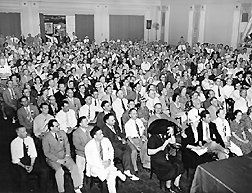
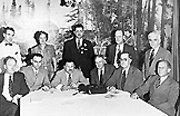
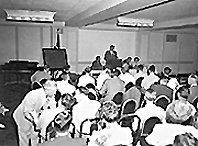
Figure 4: from the National Chiropractic Journal 1940 (Sept); 9(9): 12; journal caption reads: "Photo above shows part of the huge crowd at the National Convention on Sunday evening. More than one thousand persons heard the addresses by Governor Harold E. Stassen, Hon. A.T. Holmes, Dr. W.A. Budden and Dr. L.J. Steinbach. The theme was Public Health and Chiropractic"; Frank O. Logic,DC and CO Watkins, DC. are seated third and fourth from left in second row; seated in front of Dr. Logic and dressed in white is Waldo Poehner,DC, radiologist and future president of the NCA; Floyd Cregger,DC, another future NCA president, is seated front row with arm around woman.
In 1941 he was appointed NCA's first director of education, a post he held for 20 years.
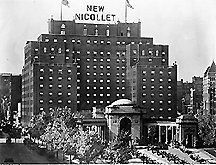
But that was future history as the NCA convened in the Twin Cities for its annual meeting. The "Land of Lakes" was glad to have them, if only for the business several hundred visitors could bring. The nation had not fully recovered from the Great Depression, and conventions were attractive ways to bring dollars to the state. Governor Harold Stassen was only too happy to address the NCA membership in assembly. In those days, the annual meetings of the national chiropractic professional associations were gala events which attracted a significant fraction of the membership. Usually held in July or August, families planned their summer vacations around the targeted convention sites, and traveled by train or automobile to major cities around the nation. The conferences included all the various business sessions of the organization and its constituent councils and committees, but also provided ample doses of technique instruction, motivational sessions, equipment displays, and the characteristic beauty contests of the era. The NCA's Journal promoted the meeting for months in advance, and the Association always picked an attractive hotel for the festivities. In 1940, it was the Nicollet.
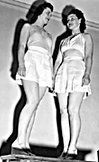
Figure 5: several swimsuit contestants at the NCA's 1940 convention (NCA photo collection)
Figure 6: from the National Chiropractic Journal 1940 (Mar); 9(3): 26; journal cap-tion reads: "Hotel Nicollet Will Be Official Convention Headquarters."
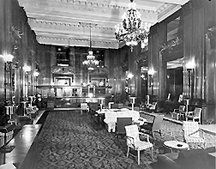
Figure 7: from the National Chiropractic Journal 1940 (June); 9(6): 30 (centerfold); journal caption reads "THE BEAUTIFUL LOBBY. Hotel Nicollet has a spacious lobby where guests may enjoy informal visits during the convention."
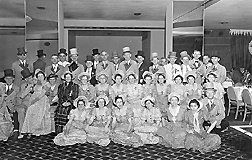
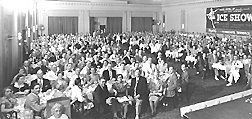
Figure 8: from the National Chiropractic Journal 1940 (Sept); 9(9): 14; journal caption reads: "This colorful assembly is part of the large group of some two hundred who attended the Chiropractic Pioneer Club Luncheon at the National Convention on Monday noon, July 20, in the Minnesota Terrace." The Pioneer Club was comprised of chiropractors who had been in practice for 25 years or longer.
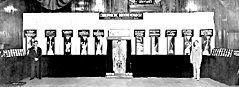
Figure 9: from the National Chiropractic Journal 1940 (Sept); 9(9): 17; caption reads: "The above photo does not do justice to the beautiful effective X-ray Exhibit in the lobby of Hotel Nicollet, directed by Dr. Waldo G. Poehner and Dr. Barney Lee, during the Aquatennial celebrations and National Convention in Minneapolis."
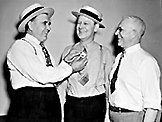
Figure 10: from the National Chiropractic Journal 1940 (July); 9(7): 46; journal caption reads: "Chiropractors of Minneapolis were first to go over the top on button sales and adopted the slogan, 'Keep smiling with an Aquatennial button.' Left to right above are Dr. O.W. Whittenberg, button caption and convention committee man; Dr. L.M. Rogers, Webster City, Iowa, national secretary, and Dr. Robert Ramsey, president of the state association."
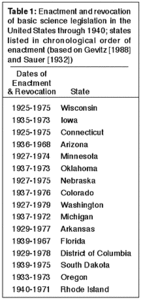
Beyond the banquets and receptions, there was also much serious business to attend to. Chiropractors were still being prosecuted in several unlicensed jurisdictions (including Louisiana, Massachusetts, Mississippi, New York and Texas), and basic science legislation continued to devastate the ranks of the profession in a good many states that had chiropractic statutes (see Table 1). (Basic science laws established testing boards in subjects such as anatomy, physiology, and pathology which applicants for licensure, DCs, DOs and MDs alike, must pass before sitting for their regulatory board's examination.) And with the war in Europe well underway, American chiropractors saw the need to prepare for their participation in the armed forces if the United States entered the fray. Commissions for DCs in the Army and Navy medical corps (Murphy & Smith, 1940; Vedder, 1940) and the provision of rehabilitation services to veterans were priorities. The organization made plans to marshal what political influence it could:
Resolution on Army and Navy Commissions
WHEREAS, many ex-service men are chiropractors who fought for their country in the last war and would again fight for the defense of their country, if necessary, and
WHEREAS, these chiropractors, through years of research and experience realize the results of Chiropractic for the sick and disabled, and
WHEREAS, chiropractors would gladly enlist to care for service men either in the army or navy in times of peace or war, provided they were granted commissions in the army and navy on the same basis as medical practitioners, and
WHEREAS, the National Chiropractic Association is working militantly to accomplish these ends in the interests of national unity and the health and welfare of our armed forces:
THEREFORE, BE IT RESOLVED that the formation of a Chiropractic Ex-Service Men's League in every state of the Union and in every Province of Canada, aiming to accomplish these ends, be given approval by the National Chiropractic Association in convention assembled in Minneapolis, with the hope that a Chiropractic Ex-Service Men's League will be formed in every state of the Union and in every Province of Canada, or in any other territorial jurisdiction in which Doctors of Chiropractic, who are ex-service men, reside...
Resolution on Disabled Veterans
WHEREAS, we believe that many of the disabled veterans who have failed to respond to the medical treatment now afforded them could be rehabilitated through Chiropractic treatment, and
WHEREAS, we further believe that the veteran should be accorded the same rights and privileges as enjoyed by every other citizen of the United States in the choice of the doctor and method of treatment, and
WHEREAS, many state and local veterans' organizations have passed resolutions petitioning the Veterans' Bureau to provide Chiropractic treatment in Veterans' hospitals on the same basis as medical treatment, and
WHEREAS, considerable of the taxpayers' money could be saved by the rehabilitation of veterans through the employment of chiropractors in veteran hospitals;
THEREFORE, BE IT RESOLVED that the National Chiropractic Association cooperate with the disabled veteran by bringing the above facts to the attention of the various veterans' organizations and the Veterans' Bureau in Washington, D.C....
Resolution on War Veteran Groups
WHEREAS, it is evident that war veteran groups have done exceptional work in Washington to help disabled veterans of the World War of 1917-18, and
WHEREAS, these war veteran groups are laboring untiringly for the welfare of the widows and orphans of war veterans;
BE IT RESOLVED that the National Chiropractic Association, in convention assembled here in Minneapolis, endorse and commend the work done by these veteran groups in Washington, and
BE IT FURTHER RESOLVED that the National Chiropractic Association extend its every effort in helping these veterans groups gain the consideration and recognition they so richly deserve, and
BE IT FURTHER RESOLVED that the National Chiropractic Association, through its legislative representative in Washington, extend its full strength to assist these veterans groups to procure those things which to them will enhance their future health and happiness, and
BE IT FURTHER RESOLVED that a copy of these resolutions be sent to the headquarters of the American Legion, Disabled Veterans of Foreign Wars, and the Army and Navy Union (Resolutions, 1940).
Figure 11: from the National Chiropractic Journal 1940 (Sept); 9(9): 13. Caption reads: "The Official Family of NCA - (Seated) Dr. C. Sterling Cooley, Dr. C.O. Watkins, Dr. Frank O. Logic, Hon. A.T. Holmes, Dr. Wilbern Lawrence, Dr. F. Lorne Wheaton. (Standing) Dr. E.J. Murphy, Mrs. C.R. Hart, Dr. W.H. McNichols, Dr. L.M. Rogers and Dr. H.K. McIlroy. Dr. James E. Slocum was not available when photo was taken."
Figure 12: from the National Chi-ropractic Journal 1940 (Sept); 9(9): 19; journal cap-tion reads: "Dr. John A. Schnick, President (left), proudly displays passport to Dr. Robt. Ramsay, Convention Chairman, who greeted him at the airport upon his arrival on Saturday evening, just in time to preside at the International College Banquet." Ramsay was president of the Minnesota College of Chiropractic.
Figure 13: Dr. Carl Cleveland, Sr. (seated second from right) listens to Missouri Governor Schoeppels' address during the Cleveland College's 1946 homecoming (courtesy of Cleveland Chiropractic College)
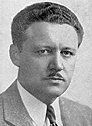
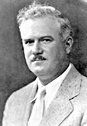
Figure 14: Gordon M. Goodfellow,DC,N.D., 1941
One near-term effect of the struggle against Nazi Germany was to delay the arrival of the NCA's president, John Schnick, D.C. of Hamilton, Ontario. Schnick was a 1923 graduate of the National College of Chiropractic and the only Canadian to ever hold this post; he had served as president since his election at the NCA's 1939 meeting in Dallas (Keating, 1997). Because Canada was then a part of the British Commonwealth while the United States still officially a neutral nation, the usually relaxed border between the two countries had been tightened, and Dr. Schnick's arrival was delayed for two days.
Far and away the most serious issue confronting the NCA was the strenuous resistance of a number of chiropractic colleges to the reform efforts initiated by the NCA and COSCEB. These schools had organized themselves as the Allied Chiropractic Educational Institutions (ACEI) in formal opposition to Nugent's plans, and had dispatched Carl S. Cleveland, Sr., D.C., president of the Cleveland Chiropractic College of Kansas City, to represent their views at the Minneapolis meeting (Ratledge, 1940). With enrollments declining due to America's pre-war military draft, many small, proprietary schools were already feeling the effects of the war.
The ACEI had numerous objections to NCA's educational reforms. Laboratory instruction in the basic sciences was an expensive proposition which many for-profit colleges could not afford. As owners, these school leaders objected also to the notion of interference in the operations of their businesses. As he had for 20 years, Palmer still insisted on limiting the course of instruction at his Davenport school to 18 months, while T.F. Ratledge,DC refused to expand the training program at his Los Angeles school beyond the 2400 hours (20 months) required by California's 1922 initiative act. Many were adamantly opposed to NCA's proposed curricula, which included subjects some of them considered "medical." "Separate and distinct" in training and practice was ACEI's rallying cry. As well, the earliest efforts of NCA and COSCEB to inspect and rate the schools had been handled rather clumsily (Palmer, 1941). Although educational accreditation was ostensibly a voluntary process in mainstream higher education, Drs. Crider and Goodfellow of the Committee on Educational Standards had threatened to list those schools which refused to cooperate as "unaccredited" in NCA publications (e.g., Crider & Tripp, 1937; Goodfellow, 1940). Not surprisingly, there were counter-threats of legal action (e.g., Ratledge, 1937).
Ironically, just as the NCA was meeting in Minneapolis, the ACEI leaders were convening in Kansas City, where they prepared an ultimatum to the NCA (ACEI, 1940):
IN THE MATTER OF THE PRESERVATION OF CHIROPRACTIC: AN ADDRESS
The Allied Chiropractic Educational Institutions in convention assembled at Kansas City, Missouri, this the 20th day of July, A.D. 1940, present this address to the National Chiropractic Ass. and to the Chiropractic Health Bureau, and each and all allied or independent organizations professedly within the Chiropractic profession...
The More Specific Ultimatum
To the National Chiropractic Association, the Chiropractic Health Bureau, and all allied organizations purporting to be within the Chiropractic profession, the Allied Chiropractic Educational Institutions goes on record and states that unless a reorganized plan of your bodies, association, or by whatever name known, reorganized, amend and change said organizations in such way as to be in conformity with the suggestions and demands of allied educational institutions, we find it is necessary that we shall withdraw all support that has ever come from the members of this organization to your organization in every way, shape and manner, and we say to you now in all kindness and truth that unless reorganization, amendments, etc., are accomplishments by you within a reasonable time, the members of the Allied Chiropractic Educational Institutions shall feel free to organize a separate national organization that will be strictly Chiropractic in all of its departments, and will look to carrying out, all and singular, the things that have been said in this address. This matter has been fully considered and unanimously passed by this organization, which has signed the same as such and each of its members has signed in his individual capacity.
Dated this 20th day of July, 1940 Signed: Allied Chiropractic Educational Institutions Per T.F. Ratledge, D.C., Secretary, Jas. R. Drain, D.C., Acting President.
Individual Members:
B.J. Palmer
Palmer School of Chiropractic Davenport, Iowa
Willard Carver
Carver Chiropractic College Oklahoma City, Okla.
T.F. Ratledge
Ratledge Chiropractic College Los Angeles, Cal.
Jas. R. Drain
Texas Chiropractic College San Antonio, Tex.
C.S. Cleveland
Cleveland Chiropractic College Kansas City, Mo.
Craig M. Kightlinger
Eastern Chiropractic Institute New York, N.Y.
C.Y. Dean
Columbia Institute of Chiropractic New York, N.Y.
Geo. M. O'Neil
O'Neil-Ross Chiropractic College Fort Wayne, Ind.
Figure 15:T.F. Ratledge, DC, president, Ratledge Chiropractic College of Los Angeles
The ultimatum was not yet known, of course, to the conventioneers in Minneapolis, but it would hardly have made much difference. The NCA was determined to ensure a better program for training doctors than had been the general custom. C.O. Watkins, D.C. of the NCA's executive board had opined that "When chiropractic history is written it will have 30 years of which it will not be proud. Thirty years characterized by lost opportunities" (Watkins, 1940). The NCA felt it could wait no longer. The colleges had dragged their collective feet long enough, and now the profession, through the agency of the NCA, must step in.
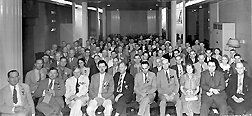
Figure 16: from the National Chiropractic Journal 1940 (Sept); 9(9): 16; caption reads: Photo shows part of the some six hundred chiroprac-tors and wives who enjoyed the delightful get-together banquet and dance at the National Convention on Monday evening, July 29, at Hotel Nicollet." James F. McGinnis,DC,ND, the first full-time spinographer at the Palmer School in 1910 and later a California-based free-lance seminar instructor in "bloodless surgery" (Keating, 1998) faces camera while sitting fourth from left at first table on left.
Figure 17: Harry R. Bybee, D.C. standing at left; Floyd Cregger is seated at left on podium during the NCA convention in Minneapolis, 1940.
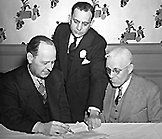
Figure 18: from the National Chiropractic Journal 1940 (June); 9(6): cover; Loran M. Rogers, DC (left) negotiates with George J. Juettner, Sales Manager of Nicollet Hotel in Minneapolis; Robert Ramsay,DC, local convention chairman, (seated right) looks on.
Figure 19: from the National Chiropractic Journal 1940 (Sept); 9(9): 15; journal caption reads: "Photo above shows the House of Counselors - the official democratic governing body of the NCA - in session at Minneapolis, where plans and policies for the coming year were outlined and adopted." L to R in front row: Wilbern Lawrence,DC; Frank O. Logic,DC; attorney Arthur T. Holmes; Kelly C. Robinson,DC; C. Sterling Cooley,DC; CO Watkins,DC; E.M. Gustafson,DC; Mrs. Celia Hart (Holmes' secretary); James E. Slocum,DC and Loran M. Rogers,DC.
The concurrent deliberations in Minneapolis and Kansas City that summer helped to shape intra-professional affairs for decades to come. In the near-term, the meetings produced several political realignments. Willard Carver,LLB,DC. and B.J. Palmer,DC, who had feuded with one another for decades, were brought together in opposition to NCA's college reforms. They worked cooperatively within the ACEI, and in March 1941, Cleveland nominated Carver to the Board of Control of the newly renamed International Chiropractors' Association's (formerly the Chiropractic Health Bureau) (Minutes, 1941).
Meanwhile, Craig M. Kightlinger, MA,DC, founder and president of the Eastern Chiropractic Institute of New York City, decided that "the day of short professional course is over" (Kightlinger,1940). Although committed to a straight chiropractic curriculum in terms of intervention (adjustment), Kightlinger endorsed more in-depth training in the basic science and many of the clinical subjects that Nugent and the NCA fostered, including:
...bacteriology, philosophy, psychology, neurology, orthopedy, pathology, symptomatology and diagnosis, anatomy, histology, physiology, hygiene, chemistry, gynecology, obstetrics, analysis, palpation, technique of adjusting, adjusting service, spinography, nerve tracing, first aid, dietetics, toxicology, jurisprudence, ethics, public health..." (Kightlinger, 1940).
Kightlinger's commitment to Nugent's reform of chiropractic education was even more firmly established several years later, when he consented to the merger of his for-profit institute with several other proprietary schools. The amalgamation produced the Chiropractic Institute of New York (CINY) in 1944 (Keating, 1996, 2000; Keating, et al., 1998, pp. 93-4), a school that would be acknowledged as one of the academically soundest in the profession.
The coming machinations in the profession's internal struggle over standards and curricula could only be dimly perceived during those muggy July days in 1940. But that Minneapolis convention, situated in the eye of the chiropractic storm, marked an important step down the profession's long path to higher standards, professionalism and legitimacy.
Figure 20: Dr. Willard Carver
Figure 21: Dr. Craig Kightlinger
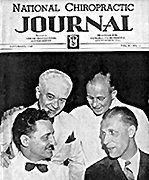
Figure 22: from the National Chiropractic Journal 1940 (Nov); 9(11): cover; a convention photo of four NCA leaders (clockwise from upper right): F. Lorne Wheaton,DC of New Haven, Connecticut, John A. Schnick,DC. of Hamilton, Ontario, W.H. McNichols,DC. of Omaha and Harry K. McIlroy,DC of Indianapolis
References:
Allied Chiropractic Educational Institutions, 20 July 1940 Ratledge papers, Cleveland Chiropractic College of Kansas City).
Crider, Wayne F. Accredited colleges - definite action on standard curricula. The Chiropractic Journal (NCA) 1936 (Jan); 5(1): 10, 36, 38, 40.
Crider, Wayne F & Tripp, R.E. Letter to T.F. Ratledge, 9 April 1937 (Ratledge papers, Cleveland Chiropractic College of Kansas City).
Gevitz, Norman. "A coarse sieve"; basic science boards and medical licensure in the United States. Journal of the History of Medicine & Allied Sciences 1988; 43: 36-63.
Gibbons, Russell W. Chiropractic's Abraham Flexner: the lonely journey of John J. Nugent, 1935-1963. Chiropractic History 1985; 5: 44-51.
Goodfellow, Gordon M. Letter to T.F. Ratledge, 16 May 1940 (Ratledge papers, Cleveland Chiropractic College of Kansas City).
Keating JC. Craig M. Kightlinger, MA,DC and the Eastern Chiropractic Institute, 1916-1944. Journal of Chiropractic Humanities 1996: 6: 26-44.
Keating JC. John A. Schnick, DC,FICC. A photo remembrance. Dynamic Chiropractic, 7 April 1997, pp. 32-3, 42.
Keating JC. James F. McGinnis, DC,ND,CP. Spinographer, educator, marketer and bloodless surgeon. Chiropractic History 1998 (Dec); 18(2): 63-79.
Keating JC. Clarence W. Weiant, DC,PhC,PhD. An early chiropractic scholar. Chiropractic History 2000 (Dec); 20(2): 49-79
Keating JC, Callender AK, Cleveland CS. A History of Chiropractic Education in North America: Report to the Council on Chiropractic Education. Davenport IA: Association for the History of Chiropractic, 1998.
Keating JC, Rehm WS. The origins and early history of the National Chiropractic Association. Journal of the Canadian Chiropractic Association 1993 (Mar); 37(1): 27-51.
Kightlinger, Craig M. Chiropractic education: the day of short professional course is over. National Chiropractic Journal 1940 (Nov); 9(11): 9, 56.
Minutes of meeting of the Alied Chiropractic Educational Institutions at Oklahoma City, 15 March 1941 (Ratledge papers, Cleveland Chiropractic College of Kansas City).
Murphy, Emmet J. & Smith, Melvin C. Officers Reserve Corps for chiropractors in armed forces is our goal; The National Legislative Office seeks recognition for chiropractic profession. National Chiropractic Journal 1940 (Apr); 10(4): 11-2.
Nugent, John J. Chiropractic Education: Outline of a Standard Course. Webster City IA: National Chiropractic Association, 1941.
Palmer BJ. Letter to Carl S. Cleveland, Sr., 7 January 1941 (Cleveland papers, Cleveland Chiropractic College of Kansas City).
Ratledge TF. Letter to Wayne F. Crider, 26 February 1937 (Ratledge papers, Cleveland Chiropractic College of Kansas City).
Ratledge TF. Letter to Carl S. Cleveland, Sr., 4 October 1940 (Ratledge papers, Cleveland Chiropractic College of Kansas City).
Resolutions adopted. National Chiropractic Journal 1940 (Sept); 9(9): 16, 54-6.
Sauer, Benjamin A. Basic science - its purpose, operation, effect. June 10, 1932; unpublished letter to the officers of the NCA and state chiropractic associations (Archives, Cleveland College/KC).
Vedder, Harry E. Chiropractic recognition should be forthcoming from War Department. National Chiropractic Journal 1940 (Mar); 10(3): 11.
Watkins CO. The science and art and philosophy of things natural - Chiropractic. National Chiropractic Journal 1940 (Mar); 9(3): 9, 49.
The proposed merger of the National Board of Chiropractic Examiners and Federation of Chiropractic Licensing Boards was approved by NBCE delegates and FCLB members at their respective annual meetings, held jointly in Atlanta, Ga., this year. Per the new bylaws, the new entity takes the NBCE name, with FCLB continuing as a department within NBCE. The federation will continue to enjoy Board of Directors representation on what will be a single, expanded board.
Before introducing subscapularis syndrome as an upper extremity analog, it is essential to revisit piriformis syndrome as a well-established example of myogenic pseudo-radiculopathy. Piriformis syndrome has long served as a clinical exception to disc-centric models of lower extremity pain and provides an important framework for understanding how deep muscular dysfunction can mimic radiculopathy in the absence of nerve root compression.
Pain has become the dominant language of musculoskeletal healthcare. Numeric pain-rating scales and symptom reports are routinely used as primary indicators of clinical success. But while pain reduction is meaningful, it is an incomplete and often misleading representation of recovery. This has real consequences for patient adherence, long-term outcomes, and how conservative care is perceived within the broader healthcare system.