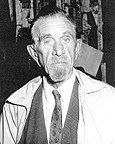
Dr. Bob Thompson: Educator, Missionary and Statesman
Joseph Keating Jr., PhD
Doctor; lawmaker; missionary; educator; and globetrotter, Robert N. Thompson, DC, MP (1914-1997) was by any measure an extraordinary fellow. Born in Innisfall, Alberta (Hultgren, 1998), he grew up in the rural Canadian farming community and trained as a school teacher. His interest in chiropractic carried him to Davenport, Iowa, where he took the course at the Palmer School of Chiropractic (PSC). Among his classmates was the future doctor William M. Harris, now president of the Foundation for the Advancement of Chiropractic Education (FACE) and a member of the board of directors of the National Institute of Chiropractic Research. Harris and Thompson were good friends, and often socialized together with their future wives, who were also very close (Harris, 2000).
Bob earned his "DC" in 1939, married his x-ray instructor, Hazel Kurth, DC, and established a practice in his home province in Canada. He held a deep respect for the pioneering work of the Palmers (Overseas, 1948), and was passionate in his commitment to spread the news of Christ chiropractic. He was unabashed in his view that the chiropractic healing art was a gift to all mankind from the Almighty (Thompson, 1957).
The outbreak of World War II shaped Dr. Thompson's life path. He served as a flight instructor for the Royal Canadian Air Force and rose to the rank of colonel. Following the Axis powers' defeat in North Africa, the Drs. Thompson and their two daughters headed to Ethiopia (Thompson, 1957) at the behest of the Allied high command and the Sudanese government to "help rebuild that war-torn country" (Hultgren, 1998). Bob worked for Ethiopia's Department of Education in Addis Ababa, where he served as director of Provincial Education (Overseas, 1948). He became a personal advisor on international affairs to Emperor Haile Selassie, trained the first pilots for the reborn Ethiopian Air Force, and was instrumental in the formation of the Organization of African States (Hultgren, 1998). His work on behalf of Ethiopia's monarch involved extensive travel throughout Africa, the Orient and North America, and involved him in the early activities of the United Nations (Overseas, 1948).
William M. Harris, DC and Robert N. Thompson, DC,MP, circa 1962.
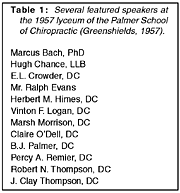
Bob and Hazel viewed themselves as "chiropractic missionaries" (Thompson, 1957). Various accounts suggest that they either established the Southern Leprosarium in Sheshemane, Ethiopia at the emperor's suggestion (Harris, 2000), or that Robert was named to head the health care facility by the Sudan Interior Mission (Hultgren, 1998). Either way, it was a labor of love, and reportedly benefited the patients considerably. However, Bob eventually lost a thumb to leprosy (Harris, 2000). Along the way, he steered several young Ethiopians to his alma mater. When he spoke at the PSC's lyceum in 1957 (see Table 1), his fundraising pitch for the leprosarium inspired a number of students to give, and eventually prompted the formation of the Christian Chiropractors' Association (Hultgren, 1998). Bob was named the International Chiropractors' Associa-tion's "Chiropractor of the Year" at homecoming that year (Greenshields, 1957).
Dr. B.J. Palmer, circa 1960.
By 1958, the Thompson family had grown from four to seven. The poor health of several of the children prompted the family's return to Canada that year, and Bob soon joined the board of directors of the Canadian Memorial Chiropractic College (CMCC) (Annual, 1959). He also became involved with the Social Credit Party (SCP), a national political organization whose platform encouraged economic and financial reform. In 1960 he was elected to the Canadian Parliament, and became minority leader for the SCP in the legislature (Harris, 2000; Hultgren, 1998). As president of the Social Credit Association of Canada (Rutherford, 1964), he followed in the footsteps of another Palmer alumnus, Joshua N. Haldeman, DC of Saskatchewan, a co-founder (in 1943) of the CMCC (Keating & Haldeman, 1995).
Figure 3:emblem of the Canadian Memorial Chiropractic College
In 1961 A. Earl Homewood, DC, ND resigned as president of the CMCC citing "frustration, disillusionment, lack of support and general stress" after eight difficult years as head of the struggling institution (Homewood, 1961). The transit authority of Toronto had expropriated a portion of the college's campus for the sake of subway construction, and the drop-off in students, tuition revenues, adequate facilities and changing property values had severely taxed the school's resources. Robert N. Thompson, DC, MP (Member of Parliament) stepped in to fill the breach. His appointment as CMCC president was largely honorific; he had little to do with the day-to-day operations of the college. However, he attended board meetings as often as his government duties in Ottawa permitted, and his annual reports reveal his active participation in problem-solving and policy-setting for the school (e.g., Annual, 1964; Thompson, 1962). As well, his connections within provincial and national government were of considerable help to the ailing CMCC, although his influence was not sufficient to bring about the institution's long-sought affiliation with a Canadian university (Brown, 1992; Rutherford, 1964). Dr. Thompson questioned whether the potential benefits of university affiliation would outweigh the difficulties.
Figure 4:Dr. A.E., Homewood
The CMCC's problems were numerous (Keating, et al., 1998, pp. 125-6); Biggs (1989) refers to this period as part of CMCC's "black years." The college's board had accepted the challenge to raise its educational standards (see Table 2), but student enrollment had "reached a new low level" in 1962. Nonetheless, Thompson felt that raising standards was "imperative" (Annual, 1964). With the expropriation of part of the campus, Thompson felt that the property was "too expensive for us to retain ...[and] too expensive to move" (Thompson, 1962). He recommended that the school relocate to "a smaller community" for economy's sake. The college's financial situation was so "urgently acute" (Thompson, 1962) that when David W. Macmillan, DC was named dean of the college, it was a part-time appointment. Dr. Macmillan served in the post only briefly, replaced that same year by the former chair of the technique department at Palmer College, Herbert Marshall Himes, DC (Keating, 2000). Mercifully, enrollment began to pick up a bit, and the CMCC's leadership continued its search for non-tuition revenue sources and a new campus (College, 1962).
Table 2: "Entrance Requirements" derived from a survey conducted at a meeting of the "General Committee of the Profession on Education," in Detroit, June 24, 1962 (Haynes, 1962: Keating, et al., 1998, p. 119)
The cover of the August 1961 issue of the Journal of the Canadian Chiropractic Association depicted the new administrative leadership of the Canadian Memorial Chiropractic College.
Caption from the March 1963 issue of Journal of the Canadian Chiropractic Association reads: "'Smiling Bob' Thompson was welcomed to Canadian Memorial Chiropractic College (CMCC) Homecoming '63 by Dean H.M. Himes, left and Dr. W.F. Trelford, Chairman of the Board of Directors of CMCC, right. Dr. Thompson was re-appointed to the position of president of the college.
Front of the CMCC campus at 252 Bloor Street in Toronto, 1945-1969. (photo courtesy of Herbert K. Lee, DC)
President A. Earl Homewood and former President Robert N. Thompson during 1969 dedication ceremonies of CMCC's new campus at 1900 Bayview Avenue, Toronto.
In 1968 Homewood returned to the CMCC's presidency after successfully raising the funds for the school's new campus on Bayview Avenue. Now no longer officially connected with the CMCC's board or administration, Bob continued to play a behind-the-scenes role, for example, in the college's efforts to affiliate with Waterloo Lutheran University (Homewood, 1969). And he was on hand on 8 March 1969 as an honored past president when the school and its board (see Table 3) dedicated the new campus.
As the 1970s dawned, Dr. Thompson accepted a position as consultant to Clinic Masters, a practice management firm located in Colorado Springs and doing business in the USA and Canada. In addition to advising company executives, he counseled "clients with individual and specific problems" (Dr. Robert, 1971) and attended the company's "explanation meetings" held several times per year in Canada. He coupled his wanderlust, business acumen and teaching skills when he led a practice management seminar held aboard a cruise ship touring the Caribbean (Advertisement, 1973). In 1972 he relocated to Fort Langley, British Columbia and taught for several years at Trinity Western University. Hultgren (1998) notes that Thompson was:...
Dr. Robert N. Thompson, circa 1971
frequently called upon by his own government and by the United Nations to serve as mediator in foreign wars, counselor to foreign governments, and delegation leader in such countries as Nigeria, Zaire, China, and Vietnam. In those years, he made dozens of trips overseas to help bring peace and harmony to many troubled peoples.
Robert N.Thompson, DC,PhC, MP.
Dr. Hazel Thompson passed away in 1992, and Robert subsequently married "a former missionary co-worker widow, Evelyn May Brandt, who survives him, along with seven of his eight children." The remarkable Dr. Bob Thompson died on 16 November 1997 at age 83, and a memorial fund was established in his memory by the Christian Chiropractors Association (Hultgren, 1988). One supposes that his zest for life and love of his fellow man would have led him to success in whatever life path he chose. The chiropractic profession can be proud to call this extraordinary fellow one of its own.
References
Advertisement for Caribbean Cruise Seminar. Digest of Chiropractic Economics 1973 (Nov/Dec); 16(3): 85.
Annual Board of Directors' meeting, Canadian Memorial Chiropractic College, 6 March 1959 (CMCC Archives)
Annual general meeting of the Canadian Memorial Chiropractic College, 7 March 1964 (CMCC Archives).
Biggs L. No bones about chiropractic? The quest for legitimacy by the Ontario chiropractic profession: 1895 to 1985. Doctoral dissertation, Department of Behavioural Sciences, University of Toronto, 1989.
Brown DM. CMCC's persistent pursuit of university affiliation, part 1: Western initiatives, 1945 to 1969. Journal of the Canadian Chiropractic Association 1992; 36(1): 33-7.
College reports: Canadian. Digest of Chiropractic Economics 1962 (Dec); 5(3):13.
Dr. Robert H. Thompson joins Clinic Masters organization. Digest of Chiropractic Economics 1971 (Sept/Oct); 14(2): 64.
Greenshields, Colin A. 1957 lyceum highlights. Canadian Chiropractic Journal 1957 (Oct/Nov); 1(4): 20-2.
Harris, William M. Letter to J.C. Keating, 5 June 2000.
Haynes, George H. Letter to Loran M. Rogers, DC, 11 July 1962 (CCE Archives, #45167).
Homewood, A. Earl. Memo/annual report to the Board of Directors, Canadian Memorial Chiropractic College, 27 February 1961 (CMCC Archives).
Homewood, A. Earl. Memorandum to Board of Directors & Senate of the Canadian Memorial Chiropractic College, 6 December 1969 (CMCC Archives)
Hultgren, Glen. Moment of silence for the remarkable Robert Thompson, D.C., Ph.C. Dynamic Chiropractic 1998 (Jan 1); 16(1): 24.
Keating JC. The search for a science of straight chiropractic: Herbert Marshall Himes, DC, PhC, FICC Dynamic Chiropractic 2000 (Dec 14); 18(26): 30-2, 41-2, 46.
Keating JC, Haldeman S. Joshua N. Haldeman, DC: the Canadian years, 1926-1950. Journal of the Canadian Chiropractic Association 1995 (Sept); 39(3): 172-86.
Keating JC, Callender AK, Cleveland CS. A History of Chiropractic Education in North America: Report to the Council on Chiropractic Education. Davenport IA: Association for the History of Chiropractic, 1998.
Overseas visitor. ICA International Review of Chiropractic 1948 (Nov); 3(5): 15.
Rutherford RM. Letter to Robert N. Thompson, 22 February 1964 (CMCC Archives).
Thompson, Robert N. A story to tell to the nations. Canadian Chiropractic Journal 1957 (Oct/Nov); 1(4): 11-2.
Thompson, Robert N. President's report to the Board of Directors, CMCC Annual Meeting, 2 March 1962 (CMCC Archives).
The proposed merger of the National Board of Chiropractic Examiners and Federation of Chiropractic Licensing Boards was approved by NBCE delegates and FCLB members at their respective annual meetings, held jointly in Atlanta, Ga., this year. Per the new bylaws, the new entity takes the NBCE name, with FCLB continuing as a department within NBCE. The federation will continue to enjoy Board of Directors representation on what will be a single, expanded board.
Before introducing subscapularis syndrome as an upper extremity analog, it is essential to revisit piriformis syndrome as a well-established example of myogenic pseudo-radiculopathy. Piriformis syndrome has long served as a clinical exception to disc-centric models of lower extremity pain and provides an important framework for understanding how deep muscular dysfunction can mimic radiculopathy in the absence of nerve root compression.
Pain has become the dominant language of musculoskeletal healthcare. Numeric pain-rating scales and symptom reports are routinely used as primary indicators of clinical success. But while pain reduction is meaningful, it is an incomplete and often misleading representation of recovery. This has real consequences for patient adherence, long-term outcomes, and how conservative care is perceived within the broader healthcare system.