The College of Chiropractic Physicians and Surgeons, 1931-1938
Joseph Keating Jr., PhD
It was the epitome of mixing, where all the best and/or worst (depending on your perspective) in alternative healing was cultivated, nurtured and accepted as "usual and customary." Its institutional rebirth in 1929 as perhaps the first nonprofit chiropractic school in California reflected the commitment of its founders to a higher degree of academic quality and professionalism within chiropractic education. Nearly two decades later its leaders transformed the school once again, through a merger with the Los Angeles College of Chiropractic (LACC), and later took the point in the profession's quest for federal accreditation (Keating, et al., 1998; Keating, 2001). It was a little school with a large impact on the course of chiropractic.
The College of Chiropractic Physicians and Surgeons (CCP&S), one of several names held by the institution from its birth as the Cale College of Chiropractic in 1925 through its merger with the Los Angeles College of Chiropractic in 1947, not only produced broad-scope chiropractors, but nurtured their legislative aspirations in the Golden State. Those who steered the institution would not only seek to train prospective DCs to function up to the limit of the legal scope of practice, but also repeatedly attempted to expand the limits of practice to create a chiropractic "physician and surgeon."
Charles Cale,DC,ND,PhC, was a product of training as a school teacher at the Indiana State Normal School in Terre Haute in the 1890s, and of Thomas Storey,DC's informal chiropractic school in Los Angeles in the first decade of the 20th century. When he chartered the Cale College of Chiropractic on 5 May 1925 (Cale, 1926), it was only the second of the three schools he would eventually establish. Cale had founded the LACC in October 1911, but sold his interest in the school in 1924 to Charles Wood,DC,ND, founder of the Los Angeles-based Eclectic College of Chiropractic. Now he sought to re-establish himself within the chiropractic educational community after a sojourn in Arizona.
The California Board of Chiropractic Examiners (BCE) did not look favorably upon the new school, and initially disapproved the college for licensure purposes. Cale, a licensed naturopath, was the sole instructor in the early days of the Cale College, which operated at first out of Cale's clinic offices in the O.T. Johnson Building at Broadway and Fourth Street in Los Angeles, but relocated to 1405 West Seventh Street on 23 November 1925, where several rooms were rented. Day and evening courses were available to complete the 18-month curriculum, which satisfied the 2,400-hour requirement of the newly empanelled BCE.
In 1929, the school's vice president and a faculty member (Drs. H.V. Kneeling and S.N. Sato, respectively) were charged by the BCE with unlicensed practice of chiropractic (Chirogram, 1929d). At about the same time, Cale obtained his chiropractic license (List, 1929). It's not clear how these actions of the BCE influenced the formation of the Southern California College of Chiropractic (SCCC), but the steps taken by Cale and his associates have been recorded. A meeting of the board of directors was held at the offices of attorney R. Lee Bagby at 1036 Security Building, Los Angeles. Six new members were added to the board, "and the corporation was voted a nonprofit institution. The capital stock was declared nondividend -aying, without par or normal value" (Aesculapian, 1950). The for-profit Cale College became the nonprofit SCCC, and Charles Cale continued as president at least until 1931. On 30 September of that year, the institution was renamed the CCP&S.
Cale was certainly not alone in his desire to reform chiropractic instruction in California. Leaders in the state organized a meeting of chiropractic college administrators in Fresno in 1932. Among the attendees were representatives of the schools as well as the BCE, the California Association of Chiropractic Colleges, the Progressive Chiropractic Association and Carlos Huntington, director of the state's Department of Professional & Vocational Standards. Conspicuously absent was T.F. Ratledge,DC, founder and president of the Ratledge System of Chiropractic Schools-Los Angeles (today's Cleveland Chiropractic College). The ultra-straight Dr. Ratledge was adamantly opposed to the intended reforms, which he saw as an attempt to "medicalize" chiropractic. The conference, however, expressing the sentiments that foreshadowed the LACC's merger with the SCCC in 1947, unanimously agreed to:
...advise ways and means whereby all chiropractic schools and colleges in this state would be owned by the profession and operated by a board of regents or governors, based upon a plan of operation outlined and followed by the University of California or similar institutions (Watkins, 1932b).
Table 1:Faculty and administration of the College of Chiropractic Physicians and Surgeons, 1933
Administration
Rangnar Bertheau,DC,ND, president Joseph Gannon,DC,ND, chairman, board of directors Gordon Goodfellow,DC,ND, vice-chairman, board of directors J.P. Mason,DC,ND, dean Raymond Howe,AB,DC,ND, secretary-treasurer
Faculty
Clyde Gillett,DC,ND Mabelle Kelso Shaw,DC,ND Stanley Livingston,DC,ND Helen Tilbury,DC,ND Alice Papa,DC,ND H.A. Houde,DC,ND N.F. Jensen,DC,ND Donald Webb,DO
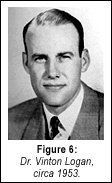
Although they were legally distinct entities, the CCP&S and the College of Naturopathic Physicians and Surgeons (CNP&S) operated side-by-side in the same facility at 1609 West Ninth Street in Los Angeles (Bertheau, 1933). Not later than 1933 Rangnar C. Bertheau, DC,ND had taken the reins as president, and a 1925 LACC alumnus, Gordon M. Goodfellow,DC,ND was serving as vice-chairman of the board of directors (see Table 1). Goodfellow is recalled by many today as president of the National Chiropractic Association (NCA; predecessor of today's ACA) in 1936, and subsequently as a trustee of his alma mater. When the CCP&S offered its "Physicians and Surgeons Post Graduate Course" in 1933, its board of directors also included Vinton Logan,DC, son of the founder and later president of the Logan Basic College of Chiropractic in St. Louis (Announcement, 1934).
The "P and S" postgraduate curriculum involved 2,060 hours and was intended as an "advanced course in medicine and surgery extending over a period of two years, open to graduate chiropractors, who desire to increase their knowledge of therapeutics" (Gibbons, 1983). The unambiguous intention was to prepare DCs for broad-scope revisions in the Golden State's chiropractic act. Training was supplemented by obstetrical rotations through Bellevue Hospital, "a 60-bed general hospital owned and operated by the Chiropractic Profession" (Gibbons, 1983). Additional clinical experience was also available at Doctor's Hospital, located at 325 West Jefferson Boulevard; the medical director at the latter facility was Howard Norcross,DO, a surgeon who also served on the CCP&S faculty.
Table 2:"A Saga of San Jose (Dedicated to Bartlett Joshua Palmer)
With Apologies to All by An Interested Observer"; from The Chiropractic Journal (NCA), April 1935
What great demolition the curse of ambition Can work with an earnest soul!What a terrible ruction and awful destructionResults when he falls in a hole!'Twas a hot summer's day at the home of B.J. Near the summit of old Brady Hill.And the thoughts of the "Master" revolved ever fasterOn ways to accomplish his will.A thought percolated, and then penetratedAnd to an idea gave birth -Of a trap he might fix for the feet of the mixer,And bring the said mixer to earth.Then he cried, "California, I solemnly warn you,The time's come for changing your ways!"And he added, with unction - "I'll get an injunction,Goodbye to your mixer-ish days!"And when that's been done, to my own Hole-In-One,You'll travel the old Sawdust Trail -Or cunning old B.J., (plus the big A.M.A.)Will lock you securely in jail!"Should you think you're exempt and treat with contemptThe order I'll get from the judge,I'll see that he'll jail you where no one can bail you,Behind bars no effort can budge."NCM rent you'll pay, and you'll do as I say,And you'll make me a daily report,Or minus compunction I'll get my injunction -And then it's contempt of court."The Golden State heard, and they gave him the bird,In the form of a loud Bronx Hurray,But they did it in vain, for he jumped on a trainThen landed in old San Jose.A couple named Steele were the first ones to feelThe wrath of the "Master" so strong,For he cited their names to learned Judge James,And claimed they had done him plumb wrong.So in a short while they brought 'em to trial.The Steeles claimed it wasn't no sinBy methods quite pure their patients to cure,The terms of their license within.But B.J. with a snort confronted the court,"The license don't mean that at all!And I hope and I pray that you'll never okaySuch actions of consummate gall!"And with specious reasons, he outlined their treasons,That ranged from contempt to derision;And the judge, much distressed, placed his hand on his breast,And said "'S awful! You get the decision!"Like a frightful earthquake this decision did shakeD.C.'s the whole universe over,While old B.J., in his cunning and gleeful way,Saw himself once again deep in clover!But the matter of Steele went ahead on appeal.B.J. said, "Now I'll just bide my time.This can only delay the eventual dayWhen once more I'll be getting mine.Back in old Ioway, hatching new plans he lay,To polish off poor Charley Boston.Who was getting too strong, and was sure doing wrongBy succeeding in cases he'd lost on!And in other states, how he proudly orates,With his usual spirit of gumption -"'Twill soon be the day when you'll do as I say -I'm going to get an injunction!"The shivering herds, at these horrendous words,Emitted a piteous wailing.But B.J. had no heart; he just said, "I am smart!I've got you all ready for jailing!"For the space of a year, everything you could hear,Or read in the Fountain H.N.,Had to do with the reck'ning inexorably beck'ning -"NCM! Or you'll go to the pen!"To speak without error, a spirit of terrorCongealed the once proud chiro's breast,From Kaintuck to Alaska; New York to Nebraska,As all who were there can attest.With long-vanished hope, they all feared the ropeThat would bind them all tight to his will,And their molars they'd gnash at the thought of their cash,Lining B.J.'s already silver-lined till.But they should have been heedless; their terrors were needless,For justice still rules in the land.For unjust oppression, at one man's obsession,Our Justices never will stand!On a cold winter's day, to the home of B.J.,A messenger boy traveled fast,A wee little fellow, with envelope yellow -Court news from Frisco at last!With a grimace of joy, he twice tipped the boy,Then the envelope open did tear.Then he fearfully cursed, "The Steele judgment reversed!"Was the message that caused him to swear.His bright visions of cash all were gone with a smash -His bubble was pricked with a pin.He reflected with shame on his high dreams of fameWhen his ship had appeared to be in!And then he remembered the words he had rendered -The words he could not now recall -His predictions dire - the eternal hell fireHe'd threatened for enemies all.His temper a-fighting, his nails all a-biting,He thought of the rash words he'd said -Of his rash-incurred debts, of his brash, empty threats,And slowly a-low drooped his head.What great demolition the curse of ambitionCan work with an earnest soul!What a terrible ruction and awful destructionResults when he falls in a hole.The power of B.J. his friends to betray,Has dwindled and faded and passed.May he study this warning - the case that died borning -And make this sad effort his last!
It was a tumultuous time for chiropractors in California. The desire for expanded practice rights was challenged by many followers of Ratledge and B.J. Palmer. Indeed, a number of court cases were then contesting whether the existing chiropractic statute, passed by the voters in 1922, permitted any therapeutic interventions other than adjustments. Referring to the feuds between straights and mixers, Paul Smallie,DC, a 1935 graduate of the Ratledge School and biographer of its founder, recalled that "at that particular time, they were really fighting...now it's somewhat camouflaged" (Smallie, 1992). The broad-scope chiropractors argued that the law permitted DCs to use any means of healing taught in chiropractic schools (hence the CCP&S's exceptionally broad-scope course offerings). Straight chiropractors, on the other hand, insisted that not even physiotherapeutics were permissible. When Palmer's supporters lost the "Steele case" in appellate court in 1935 (Liberal, 1933; Steele, 1935), an anonymous wag penned a humorous barb at B.J. (see Table 2).
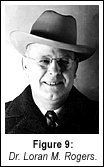
Unlike the LACC, the CCP&S was an NCA-affiliated institution, and when the national society chose Los Angeles for its first west coast convention in 1935, the CCP&S served as host. However, L.M. Rogers, secretary-treasurer of the NCA and editor of its journal, made a point of referring to the institution in print as the "College of Chiropractic Physicians," and omitted any mention of the surgical aspirations of its board and administrators. The NCA could endorse the notion of the chiropractor as a "physician" (and did so implicitly when John Nugent,DC, its future director of education, described the DC in this fashion in the educational standards he published for the NCA in 1940), but surgery was beyond what this national, broad-scope society could accept.
Table 3:Administration and faculty of the Southern California College of Chiropractic in 1944-45.
Administration
Clifford Eacrett,DC,ND, president Otis McMurtrey,ND,DC, vice-president L.E. Montenegro,DC,ND, secretary-treasurer Patrick Lackey,ND,DC, dean
Faculty (SCCC, 1994-5)
George Haynes,DC,MS,ND Wolf Adler,DO,ND,DC,LLB,DD Mabell Kelso Shaw,DC Lee Norcross,DC,ND Ralph Martin,DC H. Rainford Guest,DC,ND
Table 4:Directors and faculty of the College of Naturopathic Physicians & Surgeons, in 1946.
Directors
Patrick Lackey,ND,DC, president Otis McMurtrey,ND,DC, vice-president Ernest Johnson, secretary-treasurer Lee Norcross,ND,DC, dean Clifford Eacrett,ND,DC
Faculty Members
R.V. Jones Raymond Houser,DC,ND A.N. Nobles Howard Norcross,DO Jennie Sewell Glen Sipes
Since the CCP&S/SCCC and the CNP&S operated under one roof (see Tables 3 & 4), a decidedly naturopathic flavor was to be expected. However, naturopathy was not then quite as broad in its scope as the leaders of this school envisioned. The CCP&S and the CNP&S sought the same type of metamorphosis that osteopathy and its leading California school, the College of Osteopathic Physicians & Surgeons, had undergone 30 years earlier. (Cale had been a student at this osteopathic institution circa 1915; today the institution continues as the medical school of the University of California at Irvine.) Accordingly, the CCP&S counted within its faculty a genuinely multidisciplinary group, comprised of DCs, MDs, NDs, DOs and DSCs (chiropodists). Robert Dishman, who earned his chiropractic doctorate from the school in 1941 (CCP&S had reverted to its earlier name by that time: SCCC) recalls that his faculty endorsed the "physician-surgeon possibility" for chiropractors, including "at least minor surgery and the use of certain medicines" (Dishman, 1991). Students were instructed in electro-coagulation of tonsils and hemorrhoids as alternatives to surgical excision, and Dishman relates that the results were often superior to allopathic surgical methods. In lieu of prescription medications, glandular extracts, vitamins and "health foods" were prescribed. Also popular were iris diagnosis (i.e., iridology), colonic irrigation, and radionics. Patrick Lackey,DC,ND, 1939 president of the National-Affiliated Chiropractors of California (NACC), 1959 president of the California Chiropractic Association, and a specialist in "fever therapy" (Lackey, 1938), joined the SCCC faculty in 1941 and became dean in 1944. Fever therapy involved whole body "cooking" in order to kill off microbes. The era of "bloodless surgery" had also arrived in chiropractic (e.g., DeJarnette, 1939; Gibbons, 1991; Heese, 1991; Keating, 1998; McGinnis, 1935), and presumably exerted an influence on CCP&S/SCCC chiropractors.
Palmer graduate Clyde Gillett offered another dimension to the broad-scope DCs' vision of an expanded chiropractic healing art. He authored A Manual of Eye, Ear, Nose and Throat in 1928, and taught diagnosis, iridology and jurisprudence in the late 1920s at the San Francisco College of Chiropractors and Drugless Physicians. He lectured and advertised widely and was a prolific writer (e.g., Gillett, 1928a&b, 1929, 1938). Gillett joined the CCP&S faculty in 1933, and operated EENT specialty clinics in Hollywood and Los Angeles. A brother, osteopath Claude S. Gillett, also taught at the CCP&S.
The college continued to press the legal limits even after its name change/reversion to SCCC in 1938. That it was able to do so is a reflection of its close alliance with political forces in the state. The school's secretary-treasurer was Raymond Howe,DC,ND, a 1923 graduate of the LACC, who was also an officer in the state's broad-scope chiropractic association and editor of its journal, The Scientific Chiropractor. Floyd Cregger,DC, also served on the faculty; he was active in state affairs, and later became president of the NCA and a trustee of the LACC. Cregger became an activist in the NCA's educational reform efforts.
The 1938 name change, from CCP&S to SCCC, followed by one year a change in administration: Clifford Eacrett,DC,ND, took over as president from Rangnar Bertheau,DC,ND. Concurrently, Otis McMurtrey,DC,ND, became chairman of the college's board of directors. Wolf Adler,DO,DC became the new dean of the SCCC and Leo Montenegro,DC,ND, was appointed director of clinics. It was a significant faculty reshuffling (see Table 5), since the CCP&S' clinical training facilities had previously been supervised by osteopaths (minutes, 1938a). A few years later Montenegro was succeeded by a 1936 Ratledge graduate, George Haynes,DC,MS,ND. Haynes, it will be recalled, was destined to preside over the LACC from 1953 through 1976, and was one of two men most responsible for the federal recognition of the Council on Chiropractic Education in 1974 (Keating, et al., 1998).
Table 5:Administration and faculty of the Southern California College of Chiropractic in 1938
Administration
Clifford Eacrett DC,ND, president Otis McMurtrey,DC,ND, chairman, board of directors Wolf Adler,DO,DC,ND, dean (LLB in 1941) Raymond Howe,AB,DC,ND, secretary-treasurer F.D. Schuman, manager L.E. Montenegro,DC,ND, director of clinics
Faculty (SCCC, 1938)
Claude Gillett,DC Mabelle Kelso Shaw,DC,PhC Ralph Hoard,DO Lee Norcross,DC,ND (formerly at LACC) Henry Stevens,DO Edmund Marineau,DC,ND Nathan Mehnick,DC
The reborn SCCC continued many of the broad-scope traditions of the CCP&S, including "complete clinics, colonic therapy, electrotherapy, fever-therapy, hydrotherapy, naprapathy, naturopathy, obstetrics" (Adler, 1940). And the school could justly promote itself as a "Nonprofit and field owned. 4,000-hour curriculum including hospital internship, clinics, including colonic, electro, and fever therapy available to the field. Postgraduate courses" (advertisement, 1939a). As well, the broad-scope state society, the National-Affiliated Chiropractors of California, officially noted its appreciation of the SCCC's support for higher educational standards in 1938:
Announcements: California College Favors Amendment
We have heard it said that the chiropractic colleges are not in favor of the amendment to raise our educational requirements. There is at least one college in California that is far-seeing enough to realize that to raise the educational requirements will safeguard the future of chiropractic and materially benefit the profession and the public as well. The Southern California College of Chiropractic, located at Ninth St. and Union Ave., Los Angeles, has come out definitely in favor of our proposed amendment. The faculty, as well as the students, have given of both their time and money to help secure names on the petitions. The National-Affiliated Chiropractors of California appreciates this cooperation and takes this opportunity to express its thanks (announcements, 1938).
The SCCC's 1947 successor, the nonprofit LACC, continued to press for a very broad scope of practice, including the practice of obstetrics (Keating, 2001). But with the conversion of the CCP&S to the SCCC, a chapter closed in chiropractic history. Individual faculty, administrators and students might continue to harbor the hope that a chiropractic education could prepare them for the physician and surgeon role, but never since has that goal been so explicit.
References
Adler, Wolf. Letter to H.L. Truenbach, 8 July 1940 (LACC registrar's archives).
Aesculapian (college yearbook). Glendale: Los Angeles College of Chiropractic, 1950.
Announcement, 1934. Los Angeles: College of Chiropractic Physicians & Surgeons, 1934.
Chirogram 1929d; January 5.
DeJarnette, Major B. (Editor). Journal of Bloodless Surgery 1939 (Dec);1(1).
Dishman, Robert. Interview with J. Keating, 11 May 1991 (Palmer College West Archives).
Gibbons, Russell. Francis Kolar and chromotherapy. Chiropractic History 1991a (June); 11(1):10-1.
Gillett, Clyde. A Manual of the Eye, Ear, Nose and Throat. San Francisco: Kohnke Printing, 1928a (LACC Rare Books; WSCC Library).
Gillett, Clyde. The ear. The California Chiropractor 1928b; September: 16-7.
Gillett, Clyde. Examining the drumhead. The California Chiropractor 1929 (May);1(7):14-5.
Gillett, Clyde. The ear. The Scientific Chiropractor 1938 (Feb);3(9):26.
Heese, Ned. Major Bertrand DeJarnette: six decades of sacro-occipital research, 1924-1984. Chiropractic History 1991 (June);11(1):12-5.
Keating JC. James McGinnis,DC,ND,CP: spinographer, educator, marketer and bloodless surgeon. Chiropractic History 1998 (Dec);18(2):63-79.
Keating JC (Ed.): A History of the Los Angeles College of Chiropractic. Whittier, CA: Southern California University of Health Sciences, 2001.
Keating JC, Callender AK, Cleveland CS. A history of chiropractic education in North America: report to the Council on Chiropractic Education. Davenport IA: Association for the History of Chiropractic, 1998.
Lackey, Patrick. Electo-fever. Scientific Chiropractor 1938 (Aug);4(3):9-10. "Liberal" versus "straight in California: Steele court action. National College Journal of Chiropractic 1933 (Sept); 16(3):12.
List of new California licentiates. Chirogram 1929; April 3.
Minutes of teh board of directors of the College of Chiropractic Physicians & Surgeons, 6 January 1938a (office of the president of teh Los Angeles College of Chiropractic).
Smallie, Paul. Interview with J.C. Keating, 31 May 1992.
Steele case reversed! The Chiropractic Journal (NCA) 1935 (Mar);4(3): 5-6.
Watkins CO. Co-operative progress. Montana Chirolite, 20 February 1932b, p. 2.
The proposed merger of the National Board of Chiropractic Examiners and Federation of Chiropractic Licensing Boards was approved by NBCE delegates and FCLB members at their respective annual meetings, held jointly in Atlanta, Ga., this year. Per the new bylaws, the new entity takes the NBCE name, with FCLB continuing as a department within NBCE. The federation will continue to enjoy Board of Directors representation on what will be a single, expanded board.
Before introducing subscapularis syndrome as an upper extremity analog, it is essential to revisit piriformis syndrome as a well-established example of myogenic pseudo-radiculopathy. Piriformis syndrome has long served as a clinical exception to disc-centric models of lower extremity pain and provides an important framework for understanding how deep muscular dysfunction can mimic radiculopathy in the absence of nerve root compression.
Pain has become the dominant language of musculoskeletal healthcare. Numeric pain-rating scales and symptom reports are routinely used as primary indicators of clinical success. But while pain reduction is meaningful, it is an incomplete and often misleading representation of recovery. This has real consequences for patient adherence, long-term outcomes, and how conservative care is perceived within the broader healthcare system.